Understanding the Problem
Exploring industry and individual needs to drive meaningful change in disability inclusion.
What is the social model of disability?
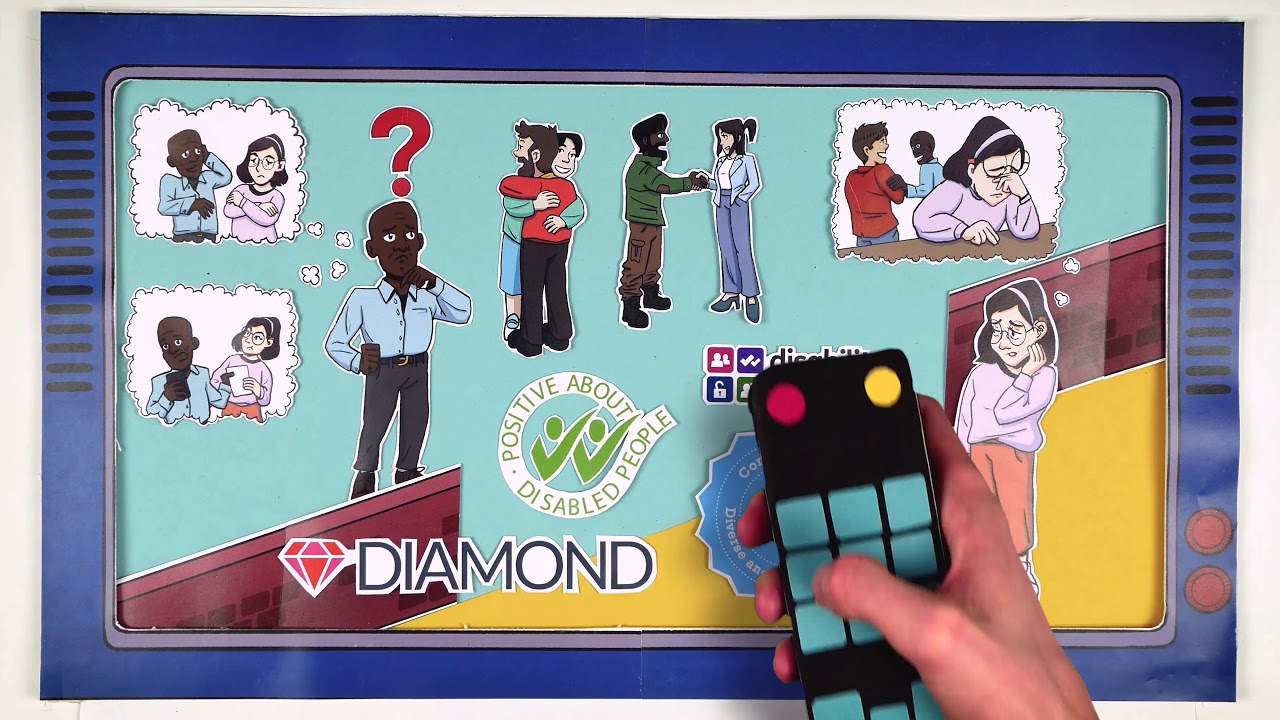
17% of working people in the UK identify as disabled. However, only 4.5% of those working off-screen in the UK television industry do. Our members aim to increase by 9% by the end of 2021. We will monitor this through Diamond – the world’s first industry-wide data collection system for monitoring the diversity on and off the screen.
The experience and voice of disabled workers in UK broadcasting is central to Doubling Disability. Commissioned research to collect information about disabled workers’ experiences.
Research findings – disabled workers’ experiences in the UK television industry
“Generally, the problem is less with the disabled person and more with the working environment and the attitudes and knowledge of the people in it.”
The research shows that disabled people face discrimination or a lack of access to opportunities in the workplace. These negative experiences range from the recruitment stage to everyday work and career progression.
Portfolio work and underemployment
Portfolio work seems to be the norm for disabled workers in UK broadcasting. We found that they work across different contracts inside and outside UK broadcasting. Only 20% of disabled people have been in full-time employment in broadcasting for the past five years.
The research suggests that disabled workers are underemployed. Every second respondent had wanted to work more than they were able to in the past five years, 82% of whom had been actively looking for work at some point in that period.
Access to career opportunities
Disabled workers generally experience inequality in accessing work and career opportunities. For each of the career-relevant factors, between one and two-thirds of respondents said they had worse access than their non-disabled peers to many factors that are important for their careers:
-
Continuous employment
-
Promotion opportunities
-
Suitable job roles
-
Networking
-
Mentoring
-
Work experience
-
Training
Understanding and attitudes towards disability at work
Almost 80% of people in the survey stated that management’s poor understanding of disability and discriminatory views about disabled people had limited their career progression. Half of the respondents said their careers had been significantly limited, for instance, by false assumptions about disabled people’s work.
Crucially, 80% of respondents feel uncomfortable discussing access requirements with employers or clients.
What needs to change
The people we surveyed called for action to tackle the barriers faced by disabled people in the industry. This includes:
-
Improving disability knowledge throughout the industry
-
Educating people at work about a range of accessibility aspects
-
Creating sustainable work opportunities
-
For disabled workers to be in the workplace at all levels of work and decision-making
These actions should create sustainable, systemic change and be visible and open to all disabled workers.
Full research reports
The following reports contain more details about the issues, based on research.
-
Our original report on Doubling Disability (PDF) with the CAMEo Research Institute at the University of Leicester sets out the challenges the industry faces
-
The shorter version of our latest report analyses the experiences of disabled people working in the UK broadcast industry (PDF). Alternative versions are available in Easy Read (PDF) and Word (Docx). Read the Press Release PDF.
-
The full version of our latest report (PDF) contains a deeper analysis and more experiences from disabled people working on TV. An alternative version in Word (Docx) is also available
Also in this section:
Use our practical resources to help you in your career or in creating a disability-inclusive workplace: